
HR Consultant & Psychometrics | LYW HR
Everyone can consider themselves to have the required professional skills:
Managerial, technical, human, and conceptual skills to carry out their functions diligently and with care.
But what about the other essential factor that relates to the understanding of organizational behavior?
MY JOURNEY

SECTION II - 2.1
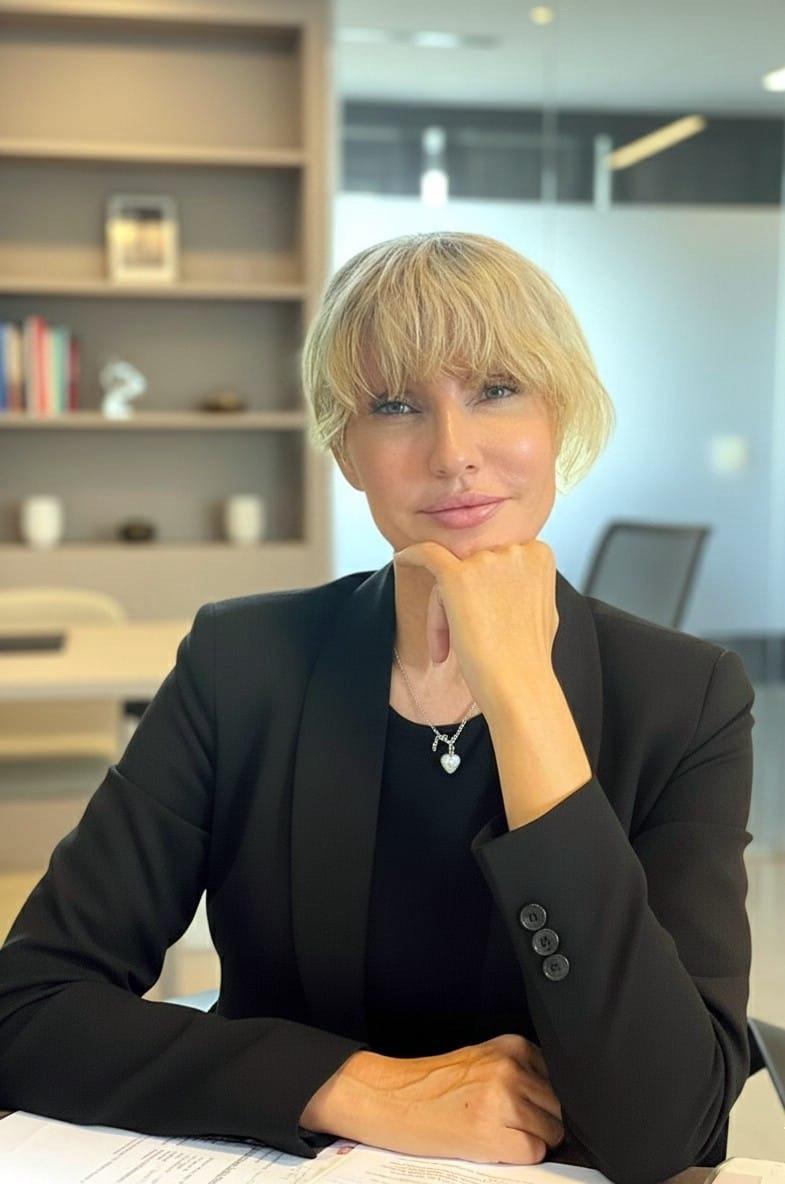
An HR professional with over 18 years of expertise in the maritime engineering industry, spanning both construction and oil and gas sectors. With a proven track record working on high-profile projects across the Middle East (Qatar, UAE, Egypt) as an HR Manager, managing culturally and professionally diverse workforces (engineers, operational teams, onshore/offshore crews and labor) and driving talent development in dynamic environments.
Holder of a master's degree in administration, private and public companies (CAAE), IAE of Nice Sophia Antipolis. Skilled in navigating complex organizational dynamics, fostering collaboration, and driving talent development in fast-paced, project-driven environments.
Trained and certified by prestigious assessment and talent management institutions such as MBTI® and Talent Pearson equipped me with the expertise to administer and interpret psychometrics to gain data-driven personality insights to improve team dynamics, leadership development, communication, and to effectively manage conflict and relief unnecessary stress or discomfort.
I'm motivated by my fascination with the intricacies of human experience and the role each person plays in societal functioning. It happens that sometimes this role is not always properly properly functioning or best made use of as certain shortcomings that often go unnoticed can hinder the development of an organization.
Often, the response to this dysfunction is the implementation of control mechanisms and costly training which do not always produce the expected results.
I focus on identifying and filling these gaps through constructive feedback and tailored interventions — sustainably improving individual and organizational environments.
The approach I adopt toward organizational behavior is holistic, combining my passion for philosophy and psychoanalysis has developed a unique perspective on human behavior within the workplace. My goal is to help organizations thrive by unlocking the full potential of their people.
DEGREES & CERTIFICATIONS
MASTER 2 ex C.A.AE.
University of Nice Sophia Antipolis
NICE SOPHIA ANTIPOLIS
CERTIFICATIONS IN PSYCHOMETRY





- MBTI® Level 1 — Level 2
- Masters Class Team — FIRO® — TKI®
- The Myers-Briggs Company (Paris)
- Strong® — PFPI® — SOSIE® 2nd Generation
- TD12® — Talent Zoom® — 360 Degree
Network Security Associate Certificates
NSE 1 & NSE 2
INFJ
OUR METHODOLOGY
SECTION II - 2.2
We follow a structured approach to help you achieve your objectives and develop a personalized plan for professional growth.
Framework and Objective Setting
We establish a clear framework and contextualize your objectives.
Exploratory Interviews
We conduct in-depth, holistic interviews using open-ended questions to gain a deeper understanding of your personality, strengths, and areas for improvement. Our neutral and balanced approach ensures an objective debriefing process.
Personalized Exploration
During our interviews, you will have the opportunity to:
- Discuss your professional context and feelings about the assessment items
- Explore how you express certain organizational behaviors
- Identify your natural preferences and strengths
- Confirm your strengths and identify areas for improvement
Action Plan and Support
Following our interviews (in person or remotely), you will receive a comprehensive booklet outlining your concrete action plan for short-term and long-term professional growth.
We also offer optional quarterly or biannual monitoring sessions to support your ongoing professional development and provide personalized feedback as required.
Our Psychometric Tools
SECTION II - 2.3
We offer a range of psychometric assessments to support talent acquisition, development, career guidance, and performance enhancement.
BOOK A CONSULTATION
First meeting free
Discuss your needs during a discovery interview with no obligation.
OUR FAVORITE THINKERS AND OTHER PHILOSOPHERS (NON-EXHAUSTIVE)
FOR FURTHER READING - 2.5
Organizational behavior is grounded in disciplines such as psychology, social psychology, sociology and anthropology. Stephen Robbins and Timothy Judge defined organizational behavior as a field of study aimed at exploring the impact of individuals (and their acquired knowledge), groups, and the effects of structures (in any sector) on the behaviors of actors within an organization — in order to improve its effectiveness and ensure its sustainability.
Our personality has several layers: our persona (our public mask), the ego, our conscious self, the personal unconscious, our repressed experiences, the shadow of rejected traits, and the collective unconscious (universal human patterns).
We start from the assumption that our personality remains stable. It is described as "a dynamic individual organization of psycho-physiological systems that determine a person's unique adjustments to their environment" (Gordon Allport, 1937, p. 48 — personality traits; theory of personality).
However, our professional behaviors can evolve through observing others' behaviors, analyzing our own behaviors, and exploring new experiences that may reveal unused skills.
- Cognitive functions: the brain's capacities that allow us to interact with our environment — perceiving, focusing, acquiring knowledge, reasoning, adapting, and interacting with others — through attention, memory, and executive functions.
- Cognitive reasoning styles: deductive reasoning (from general to particular), inductive (from particular to general), analogy (comparison with a similar situation), reductio ad absurdum (supporting the opposite idea), and syllogism.
- Types of intelligence: fluid intelligence (the ability to think logically and solve novel problems, independent of acquired knowledge) and crystallized intelligence (using knowledge acquired from past experiences to make decisions in the present).
- Jeffrey Young's theory of 18 early maladaptive schemas (1990).
- Internal states of a profile at a given moment in terms of feelings, perceptions, beliefs.
Organizational behaviors — Stephen Robbins, Timothy Judge (PEARSON edition) — document 4.1 — Affect, emotion, and mood:
- Affects are a broad range of experienced feelings — a term used to describe the wide variety of feelings people experience, including emotions and moods.
- Emotion is caused by a specific event, of very short duration (a few moments), and can take many specific forms (anger, fear, sadness, joy, disgust, surprise); it is usually accompanied by facial expressions and naturally entails an action.
- Mood arises from a general cause and is often unclear; it lasts longer than emotions (several hours), contains two main dimensions (positive affect and negative affect), each grouping several emotions. It does not come with distinctive external signs; it is an intense feeling directed toward something or someone and is cognitive in nature.
- Intentions to act that are specific to each profile (self-centered / framed by a systemic approach to interactions and relationships within the organization); an understanding of schemas, social desirability, and interdependence ("influenced by colleagues").
- The psyche: the set of conscious and unconscious processes that are specific to each individual. Psyche (n.f.): soul (Larousse dictionary).
- Psychoanalysis integrates three types of psychic structure: neurotic, psychotic, and borderline — childhood traumas that affect us in adulthood (source: Carl Jung).
HERE IS A NON-EXHAUSTIVE LIST OF REFERENCES ON WHICH WE DRAW...
FOR FURTHER READING - 2.4
HANNAH ARENDT MÉLANIE KLEIN KATHARINE C. BRIGGS, ISABEL BRIGGS MYERS
PLATO ARISTOTLE MARCUS AURELIUS, SENECA, EPICTETUS
FREUD, LACAN CHARLES PEPIN ANDRÉ COMTE-SPONVILLE
CARL JUNG JULIA DE FUNÈS LUC FERRY MARIE-ROBERT
BORIS CYRULNIK CLÉMENT ROSSET BÉRÉNICE LEVET
ALISSA ZINOVIEVNA ÉTIENNE KLEIN CLAIRE MARIN
ROGER-POL DROIT ALEX MUCCHIELLI BESSEL VAN DER KOLK
PETER A. LEVINE G. FRANÇOIS LECOINTRE WORKS OF WINNICOTT
WORKS OF SANDOR FERENCZI SAUSSURE
SANNA MENSCHAKOV JUDGE LAMBERT HOFSTEDE MODEL, HEIDEGGER
JEFFREY YOUNG MINTZBERG PYTHAGORAS
LILIANE FAINSILBER ALAIN DE MIJOLA SIMONE VEIL, HALIMI
CARNET PSY CAIRN INFO PHILOSOPHIE MAGAZINE
CITATIONS
FOR FURTHER READING - 2.6
"The good news is that man is a bridge, not an end." — Friedrich Nietzsche.
"All the future is uncertain: live in the present." — Seneca.
"Within each of us there exists another being that we do not know. He speaks to us through dreams and lets us know that he sees us very differently from what we believe ourselves to be." — Carl Jung.
"Difficulty attracts the man of character, for it is by embracing it that he realizes himself." — General de Gaulle.
"Until you make the unconscious conscious, it will direct your life and you will call it fate." — Carl Jung.
"Everything that irritates us about others can lead us to a better understanding of ourselves." — Carl Jung.
"We have the potential. If we can learn to be indifferent to what makes no difference." — Marcus Aurelius.
In medio stat virtus — Aristotle: "Virtue stands in the middle."
"What matters is to communicate; it's no longer about what you have to say." — Alex Mucchielli.
"The happiness of your life depends on the quality of your thoughts." — Marcus Aurelius.
"It is not what happens to you, but how you react to it that matters." — Epictetus.
"The obstacle is the way." — Marcus Aurelius.
"A journey of a thousand miles begins with a single step." — Lao-Tzu.
"No one is free unless he masters himself." — Epictetus.
"What depends on you is whether to accept or not what does not depend on you." — Epictetus.
"To know is to know that one knows nothing. That is the meaning of true knowledge." — Socrates.
"Knowledge speaks, but wisdom listens." — Jimi Hendrix.
"Difficulty strengthens the mind, as work strengthens the body." — Seneca.
"He who fears suffering already suffers from the fear." — Michel de Montaigne.
"When we are no longer able to change a situation, we are challenged to change ourselves." — Viktor Frankl.
"You have power over your mind — not outside events. Realize this, and you will find strength." — Marcus Aurelius.
"Freedom is the only worthy goal in life. It is won by disregarding things that are beyond our control." — Epictetus.
"Don't explain your philosophy. Live it." — Epictetus.
"The body keeps the score." — Bessel van der Kolk.
"Man is the only animal whose actions are uncertain: he hesitates and gropes, forming plans with the hope of succeeding and the fear of failing." — Henri Bergson.
According to Lacan, every expectation is a speech because it manifests as an appeal to the Other to fill a lack, and a demand is the articulation of that need and desire, where the demand for love is central.
Speech is what allows one to recognize one's own desire and to address the Other to fill it, transforming a simple biological need into a demand directed symbolically.
Melanie Klein — If, deep within our unconscious, we have become able to some extent to erase the grievances felt against our parents, then we can be at peace with ourselves and love others in the true sense of the word.
One must be an absorber of anxiety and a diffuser of confidence. "The art of the leader is to simplify complexity and give a vision." — General De Villiers (leadership).
"A child never has the parents he dreams of. Only children without parents have parents of dreams." — Boris Cyrulnik.
"If suffering leads to creativity, it does not mean one must be subjected to suffering to become creative." — Boris Cyrulnik.
"Every wounded being is forced into metamorphosis." — Boris Cyrulnik.
"The right words found at the right time are action." — Hannah Arendt.